

Spirulina Explained: What It Is and How People Take It
You’ve probably seen spirulina in smoothie bowls or on the shelves of health stores. But what exactly is it? Here’s a clear explanation.
What is spirulina?
Spirulina is a type of blue-green microalga (technically a cyanobacterium) that grows in warm, alkaline water. It has been eaten as a food in different parts of the world for centuries, and today it is farmed and dried into a fine, deep-green powder.
What does it contain?
Dried spirulina is known for being rich in protein by weight, and it also contains various vitamins, minerals and natural pigments — including the blue pigment phycocyanin that gives it its distinctive colour. Exact amounts vary from product to product, so the product label is the best guide to what’s in a particular pack.
Powder vs capsules
| Powder | Capsules | |
|---|---|---|
| Taste | Strong, earthy — some people dislike it | No taste |
| Preparation | Needs mixing into a drink or food | Swallow with water |
| Portability | Can be messy to carry | Easy to carry and travel with |
| Measuring | Needs a scoop | Pre-measured per capsule |
Things to keep in mind
- Buy from a trusted brand. Because spirulina is grown in water, quality control during farming matters.
- Check if it’s right for you. People with phenylketonuria (PKU), autoimmune conditions, or who take medicines should speak with a doctor before using spirulina.
- Follow the label. Take only the amount stated on the pack.
Questions?
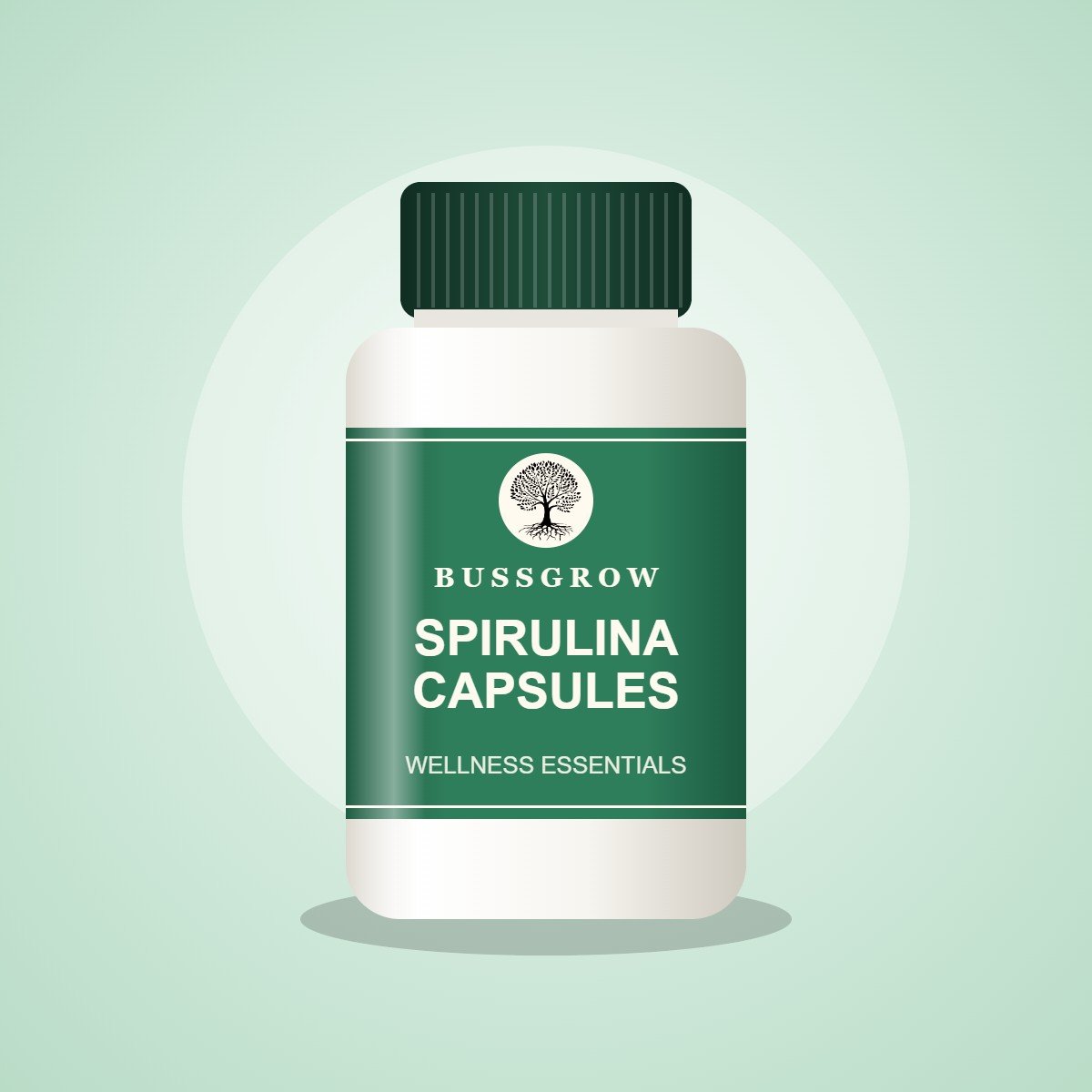
You can view Bussgrow Spirulina Capsules in our shop, or message us on WhatsApp at +91 63590 79055 and we’ll be happy to help.
Please note: This article is for general information only and is not medical advice. Supplements are not intended to diagnose, treat, cure or prevent any disease and are not a substitute for a varied, balanced diet. Always read the product label, and speak to a doctor or qualified healthcare professional before starting any supplement — especially if you are pregnant, nursing, taking medication, have a medical condition, or are buying for someone under 18.
About author

Add comment